Condo HVAC maintenance is one of those things strata boards keep deferring until something breaks at 11pm in a suite directly above the penthouse. Then the emergency call-out costs far more than the annual service it was meant to prevent, the water has already come through the ceiling, and the board is negotiating a claim with an insurer who wants to know when the last maintenance was done.
We service in-suite PTAC and VTAC equipment, wall units, fan coils and common-area rooftop units across Toronto condos. The work is delivered under a written service agreement: a defined scope, defined seasonal visits, defined emergency response times, and a written report after every visit that the board can forward to owners without editing.
We hold Red Seal, TSSA, ESA and HRAI credentials, carry $5M liability and WSIB coverage, and issue certificates of insurance within 24 hours of request. We are authorized dealers for Mitsubishi Electric, Daikin, Fujitsu and Carrier commercial lines, so equipment we specify is registered and warranted properly.
Why condo HVAC needs a contract, not a phone number
The difficulty with condo HVAC is not technical, it is administrative. In a typical Toronto tower there are four different ownership situations in the same building:
- Corporation-owned in-suite equipment. The strata corporation owns and maintains the units in every suite. This is the arrangement that most benefits from a building contract.
- Owner-owned in-suite equipment. Each owner is responsible for their own unit. Nobody is maintaining them collectively, and they all age at once.
- Owner-owned equipment, corporation-maintained access. The unit belongs to the owner, but the corporation controls the risers, sleeves and the roof, so any work needs the board’s process.
- Common-element plant. Corridor, lobby, amenity and garage heating, plus any rooftop unit serving the building.
When nobody owns the maintenance program, the result is predictable. A building of 64 units where each owner waits for their own unit to fail gets 64 separate emergency call-outs in the same eighteen-month window, at emergency rates, with no records, no forecasting and no board visibility. A building contract turns that into two scheduled rounds and a report.
What an annual condo HVAC maintenance visit covers
Each service visit is a fixed checklist, not a vague promise to have a look. Per unit, our technicians:
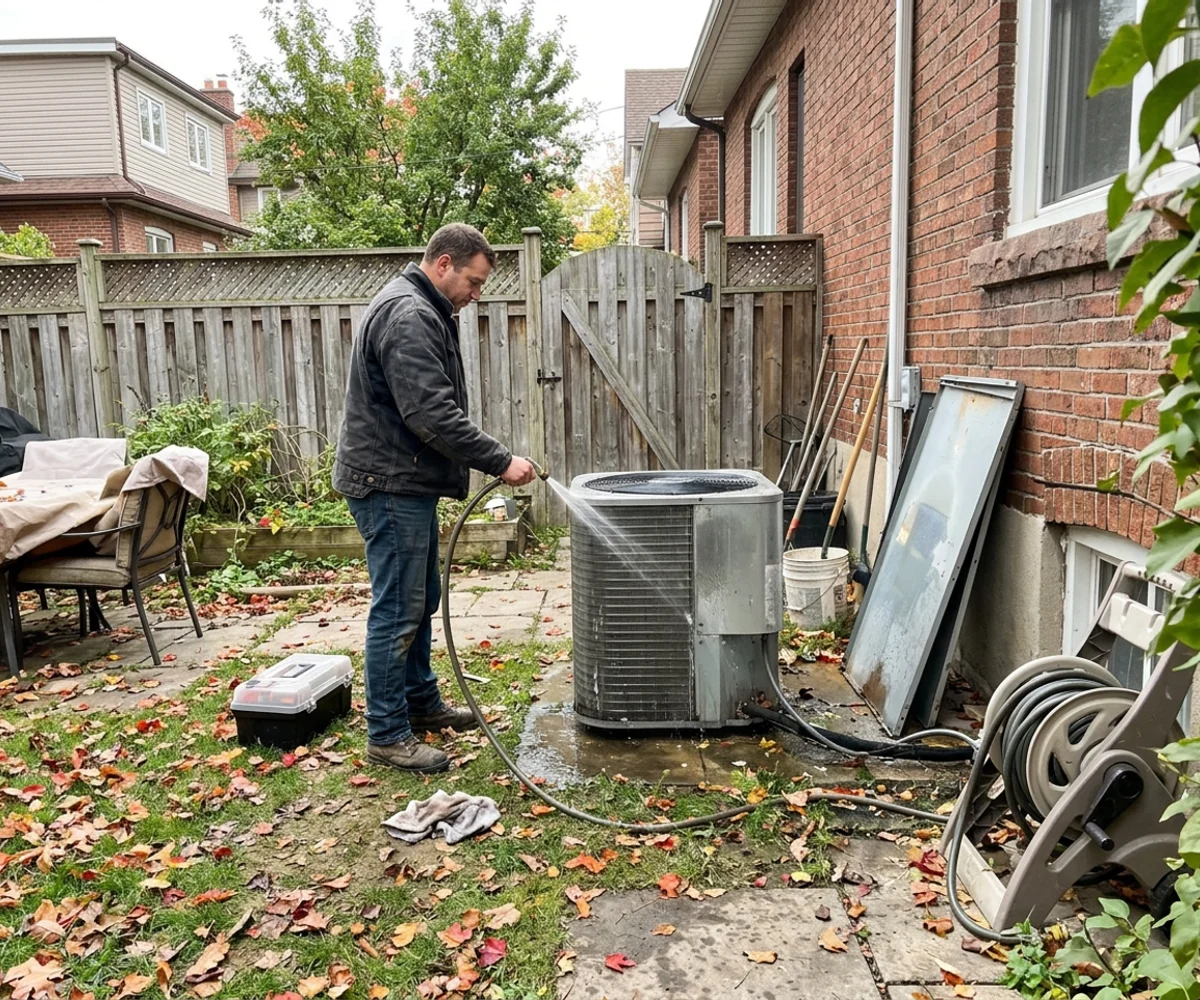
- Clean the coil. Vacuum and rinse the evaporator and condenser coils. A dirty coil raises head pressure, cuts capacity and is one of the main reasons a unit seems to have stopped heating.
- Clean the blower wheel and drain. The blower wheel is removed and washed, the condensate pan is cleaned, and the drain line is flushed and flow-tested. A blocked drain in a high-rise is the single most common cause of interior water damage.
- Service the filters. Cleaned or replaced, and the filter size noted so the board knows what to buy in future.
- Verify the refrigerant charge. Superheat and subcooling readings are taken with a calibrated gauge set and logged per unit, along as the suction and discharge temperatures. Numbers on paper are what let a board decide whether a unit is properly charged or slowly leaking.
- Test the heat mode. On heat pump PTACs and VTACs we verify reversing, defrost initiation and the emergency heat elements where present.
- Check the electrical. Connections torqued, contactor and capacitor checked, and any corrosion cleaned.
- Photograph and report. Photographs of the unit, the readings and anything concerning, with a written condition rating per unit.
That report is the deliverable that matters to a board. It turns “the units are old” into a priced, phased plan.
PTAC and VTAC tune-ups specifically
Toronto towers run on two through-wall equipment types and the difference matters when you are budgeting.
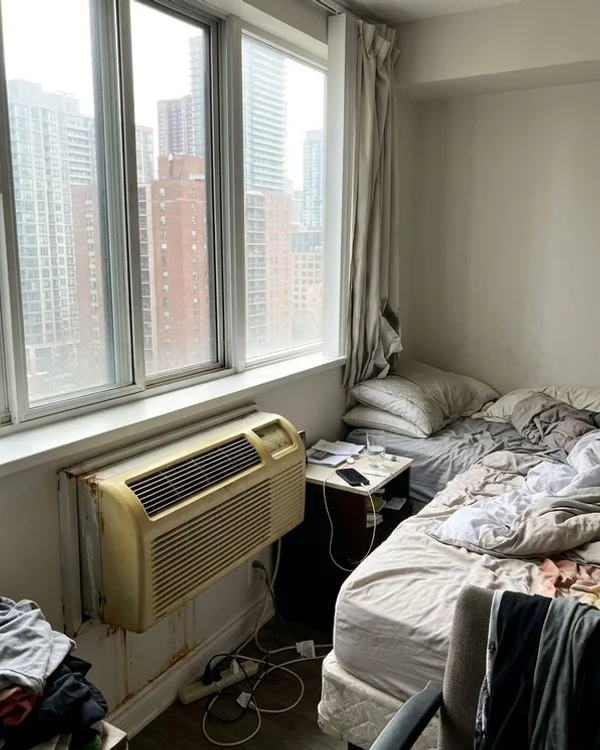
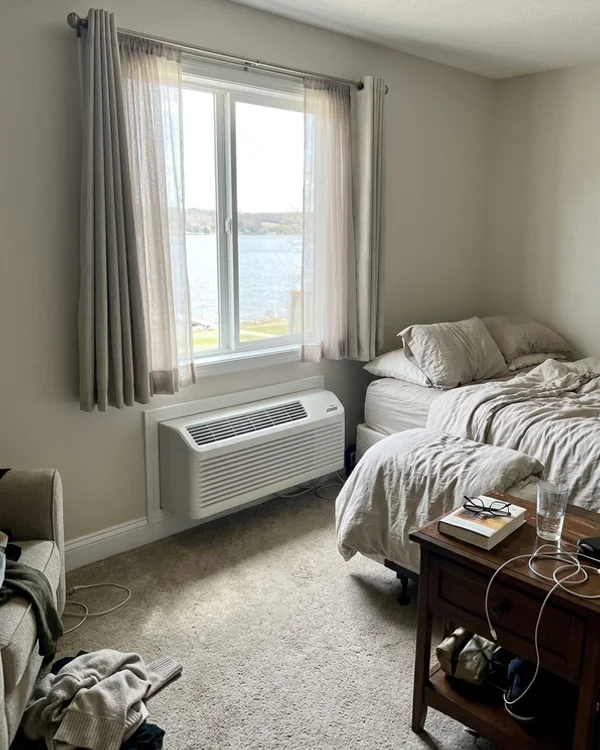
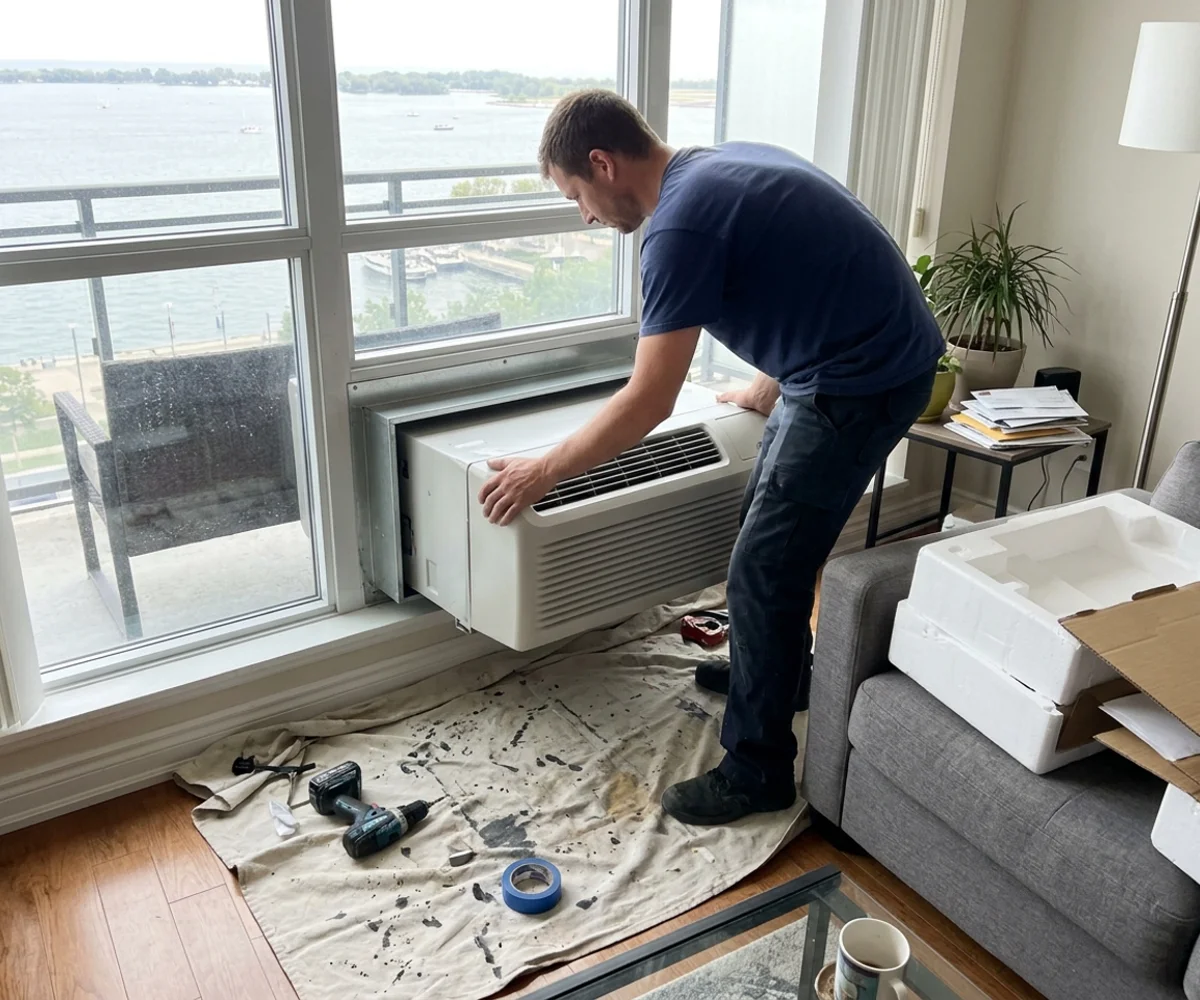
PTAC units sit in a wall sleeve under the window. They heat with a reverse-cycle heat pump on newer models, and with electric resistance strips on older ones. A resistance-heat PTAC is effectively a space heater that happens to have a compressor attached, so winter cost per suite is high. Swapping a 20-year-old resistance unit for a heat pump PTAC in the same sleeve is usually the highest-value work available to a board, because it requires no structural work and no new exterior penetrations.
VTAC units are vertical and sit in a mechanical closet. Same equipment family, different footprint and usually better sound performance. Where a suite has a closet, the VTAC is the better choice.
The maintenance reality for both: coils silt up faster at the base of the coil in a vertical discharge, drains run long and clog, and the sleeves on older units are often corroded enough that a new unit needs a matched sleeve. We check the sleeve condition on every visit and report it, because a sleeve that fails in February is an emergency nobody planned for.
Bulk unit coverage for whole buildings
Bulk coverage is where condo HVAC maintenance becomes genuinely affordable. The economics work like this: when we replace 20 units in one building in one phase, we do it on one approved spec, in continuous runs, with one crane or hoist arrangement, one permit, one insurance certificate and one board submission. The per-unit cost of a phased 20-unit replacement is meaningfully lower than 20 separate replacements, and the disruption is a planned inconvenience instead of a rolling emergency.
How we run it:
- Inventory first. Every unit in the building is recorded by type, age, sleeve, mechanical condition and ownership. No unit is replaced on an assumption.
- One spec, board approved. The board approves a single equipment spec, noise rating and installation method for the building, with the full documentation package prepared and submitted by us.
- Phased execution. Units are replaced floor by floor in a schedule agreed with the property manager and the residents. Suites are protected, the old unit is removed, the sleeve is checked and sealed, and the new unit is tested in both heat and cool in a single visit.
- Records as you go. A per-unit register of serial numbers, warranty registrations and readings goes to the corporation as each round closes.
The Harbourfront building in our condo heat pump case study took this route, and so did the Liberty Village building in the case study below.
The annual service calendar
Maintenance works best when it is scheduled rather than remembered. Our contract calendar for a Toronto building looks like this, and the timing is deliberate: the spring round happens before the cooling season, the fall round before the heating season, and the emergency cover sits underneath both.
| Timing | Work | Why it happens then |
|---|---|---|
| March to April | Spring service round: coil, blower, drain, filters, charge readings, controls | Before the cooling season, so a marginal unit is found before July |
| June | Filter service reminder and mid-season spot check on complaint units | Catches units that loaded up in high humidity |
| September to October | Fall heat readiness round: heat mode, defrost, emergency heat elements | Before the statutory heating season and the first cold snap |
| November to February | Emergency cover under the agreement, with response times in writing | When failures actually happen in Toronto |
| March | Written year-end condition report and replacement forecast | While the board is still thinking about the coming year’s budget |
For buildings with a garage or a mechanical room that operates year round, we add an extra visit in December and a mid-year filter round, because common-area equipment takes the same abuse all year.
Owner-occupied suites, rented suites and the awkward middle
Ownership gets complicated in most Toronto buildings, and the maintenance program has to respect it rather than blur it. Three arrangements are common:
- Corporation-owned in-suite equipment. The strata corporation is responsible for the units in every suite. A building contract covers all of them, and the cost is a common expense.
- Owner-owned in-suite equipment, rented out. The owner maintains their own unit but uses the corporation’s risers, sleeves and roof. The unit needs the corporation’s approval process for any work that touches common elements, and our service agreement covers both the approval step and the owner billing.
- Owner-occupied suites in a mostly rented building. Usually serviced on a per-visit basis at the owner’s request, with the option to fold into the building contract mid-year.
We confirm ownership for every unit during the building inventory, so nobody gets an invoice for maintaining equipment that is not theirs, and no unit gets skipped because nobody was sure who owns it. That inventory is the single most useful document a board can hold, because it turns an argument about responsibility into a lookup.
Turnover inspections and move-in, move-out
Condo buildings constantly have suites changing hands, and the HVAC condition at turnover is a recurring source of friction. We support managers with:
- Condition reports at turnover. A per-unit report with photographs, readings and a condition rating, formatted to be attached to a move-out inspection.
- Pre-listing touch-ups. Cleaning, filter service and a controls reset before a suite is listed, so the unit is not a negotiating item.
- Turnaround between tenants. A unit serviced and tested between a move-out and a move-in, often coordinated with the building’s key handover schedule.
These are usually offered as part of a building contract at no additional per-unit charge, because the technician is already on the floor. If a building has no contract, they are available as standalone visit pricing.
The load calculation check behind every replacement recommendation
Before we recommend replacing an in-suite unit, we verify its rated capacity against the suite’s actual load. It is the same written Manual J method we use on the residential side, scaled to a suite, and it matters for three reasons.
First, it prevents the most common strata mistake: replacing a properly sized working unit with an undersized one because the board assumed bigger was better. An undersized unit in a poorly insulated north-facing suite will run continuously and never reach setpoint.
Second, it tells the board what the suite actually needs. A 650 sq ft suite on the building’s south side and a 1,100 sq ft corner suite on the north side do not take the same equipment, and the maintenance report should say so before a replacement is approved.
Third, it is what makes a heat pump PTAC the right call. A suite that was sized for electric resistance heat needs a unit with enough capacity to carry the whole heating load with the compressor alone, at a Toronto winter design temperature, with backup heat only as insurance. That is a capacity question, and capacity questions are answered by calculation rather than by square footage.
Emergency response for strata buildings
Maintenance contracts exist to make emergencies rare, not to pretend they do not happen. Our phone is answered 24/7, and we provide after-hours emergency dispatch for condo buildings, including:
- No-heat and no-cool calls in occupied suites.
- Water-damage risk from a leaking unit or a blocked condensate drain, treated as a priority call-out.
- After-hours access coordination with the property manager and the building concierge.
- Immediate documentation of the event for the corporation’s insurance file.
Non-contract emergency call-outs run $525 to $850 per event. Contract clients receive the response times written into their agreement, and their priority rates. We would rather have a board on the contract than have them discovering what an emergency premium costs.
What a condo HVAC maintenance contract includes
| Contract element | What you get |
|---|---|
| Spring round | Full service on every unit before the cooling season, with logged readings |
| Fall round | Heat mode, defrost and emergency heat verified before the heating season |
| Emergency dispatch | 24/7 phone and after-hours response for no-heat, no-cool and leak call-outs |
| Per-unit reporting | Written condition report, readings and photographs after every visit |
| Replacement forecast | A multi-year plan with costs, so the board can reserve funds |
| Documentation | COI within 24 hours, ESA and WSIB records, warranty registrations |
| Board support | We answer the property manager and board questions directly |
The scope is written to fit the building, not a package we sell to every corporation. A 40-unit building in a quiet residential tower with no after-hours access needs a different agreement from a 120-unit mixed-use tower with a concierge and a restaurant.
The maintenance calendar: when to schedule
Timing matters more than most boards expect. A unit serviced in the wrong month either gets skipped or gets skipped in a hurry.
| Window | Work we schedule | Why then |
|---|---|---|
| March to May | Full annual service on every in-suite unit | Before the cooling season, with heat still available if a fault is found |
| September to November | Pre-heating season check on the building’s mechanical systems | Before the first cold snap, while a shutdown is still affordable |
| December to February | Emergency response only | Heating load is at its peak and failures do the most damage |
| June to August | Turnover service between tenancies | Suites are empty, so the work is faster, quieter and cheaper |
Turnover work is the exception to the calendar, because it happens whenever a suite empties. We keep a fast-turn checklist for it: clean and sanitize the coil and blower, verify the drain, confirm the charge, test the unit in both heat and cool, and hand back a dated record for the file.
We also recommend one mid-winter spot check for buildings with a history of drain freezes, or with units on exposed exterior walls where wind chill drives the pan heater harder than it was designed for. That single visit is the cheapest way to catch a marginal drain before it becomes water damage through the ceiling of the suite below.
Common-area mechanical systems
Most strata boards focus on the in-suite units, because those are the ones residents complain about. The common-area plant is where the silent costs sit: corridor and lobby heating, garage ventilation and heat, laundry rooms, amenity areas and any rooftop equipment serving the building.
These systems need a different kind of service attention:
- Rooftop units serving common areas get the same diagnostic treatment as any commercial equipment, with logged readings, a coil wash and a written condition report, plus a check on the economizer and outdoor air dampers that nobody looks at until a mild day in April pulls the building down.
- Garage and corridor heat in Toronto is a freeze-protection problem as much as a comfort problem. We verify freeze stats, drain heat, unit heaters and the freeze protection controls on every visit, because a garage is the hardest working room in the building.
- Boiler and heating plant servicing, where a building still has one, gets combustion analysis, expansion tank and pressure checks, and a written efficiency reading, which is the number a board should have when someone proposes a heat pump retrofit.
- Air quality and filtration in common areas, where units recirculate, gets filters checked and replaced on schedule rather than when the tenant complains about a dusty corridor.
We hold Red Seal HVAC, TSSA gas technician, ESA electrical and HRAI credentials, so common-area plant work is covered by the same crew and the same insurance as the in-suite work. It is also the single most useful thing a board can do before deciding on a retrofit, because a documented baseline of what the plant actually costs is what makes the business case arguable.
Case study: 64-suite building, Liberty Village
A 64-unit Liberty Village building had nine suites still on 22-year-old PTACs and no service contract at all. The property manager was handling call-outs one at a time and had no reliable record of the remaining equipment.
We ran a full inventory of all 64 in-suite units and the two common-area rooftop units, produced a per-unit condition report with a replacement forecast by year, and then took on a building-wide annual maintenance contract. Twelve units were replaced over three phased rounds on one board-approved spec, with the remainder on a planned replacement schedule the board has budgeted.
Contract price was $312 per unit per year, and the board now reviews a seasonal report instead of fielding emergency phone calls.
Working with condo boards and property managers
We work for boards and property managers, and we know how they operate. That means:
- Written everything. The scope, the pricing, the response times and the reporting format are all documented before we start.
- One contact. Your property manager has a name and a number for the account, not a generic service line.
- Board-ready reporting. Condition reports, invoices and forecast documents are formatted so they can be attached to a meeting agenda without editing.
- Owner coordination. Where equipment is owner-owned, we work to the corporation’s process for access and approvals, and we bill the owner directly where that is the correct arrangement.
- Insurance ready. $5M liability and WSIB, with certificates of insurance issued within 24 hours of request so nothing stalls at the board meeting.
If your corporation has units coming due, or you are heading into a season with no maintenance history, request a building inventory and quote. We will walk the building, document every unit, and give you a priced plan. For emergency service in the meantime, call (647) 277-5401, answered 24/7.
We work in buildings across downtown Toronto, Etobicoke, North York and the wider GTA, and we are happy to quote maintenance for buildings outside Toronto as part of a portfolio arrangement.