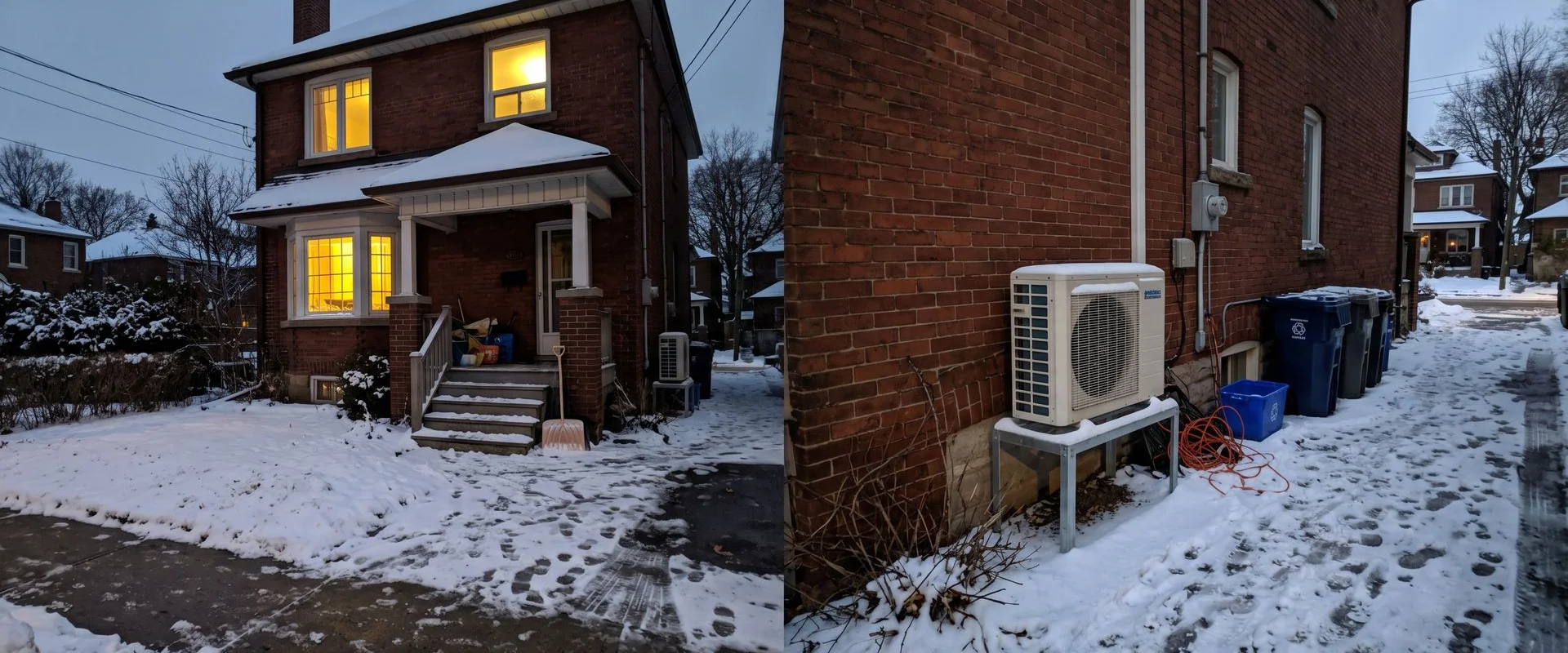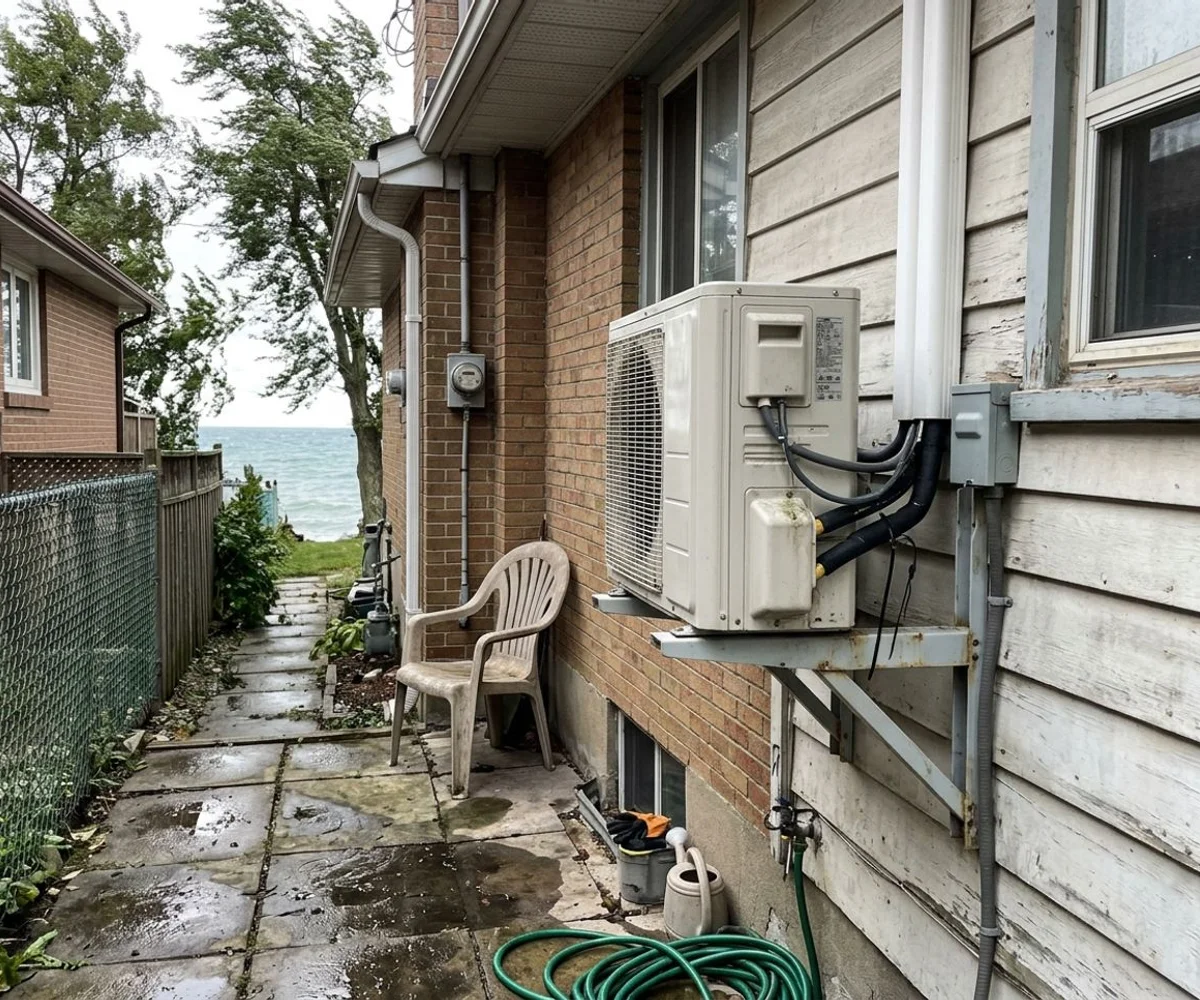
Air-source heat pumps in Toronto pull heat out of outdoor air, even at -25C, and move it inside. In summer the cycle runs backwards and it’s your air conditioner. Nearly every heat pump in Toronto is air-source. Ground-source geothermal needs drilling and costs far more. The question that matters for Toronto isn’t air-source or not. It’s whether the unit carries a real cold-climate rating. NEEP and NRCan listings tell you which ones do.
How does an air-source heat pump work?
A refrigeration cycle, the same one in your fridge.
- Outdoor coil absorbs heat from the air. Even at -20C there’s usable heat in it.
- The inverter compressor squeezes the refrigerant, raising its temperature.
- The indoor coil releases that heat into your ducts or ductless heads.
- An expansion valve drops the pressure and the cycle repeats.
The reversing valve flips the direction for cooling. COP, the heat delivered per unit of electricity, runs near 3 in typical Toronto winter weather on a cold-climate unit and stays above 1 even in deep cold.
Air-source or ground-source geothermal?
| Air-source (ASHP) | Ground-source (geothermal) | |
|---|---|---|
| Heat source | Outdoor air | Ground loop |
| Site work | Pad or wall bracket | Drilling or trenching |
| Toronto lot fit | Almost any lot | Hard on narrow or mature lots |
| Typical cost | $4,500-$22,000 by format | Several times higher |
| Cold performance | Excellent on cold-climate models | Excellent |
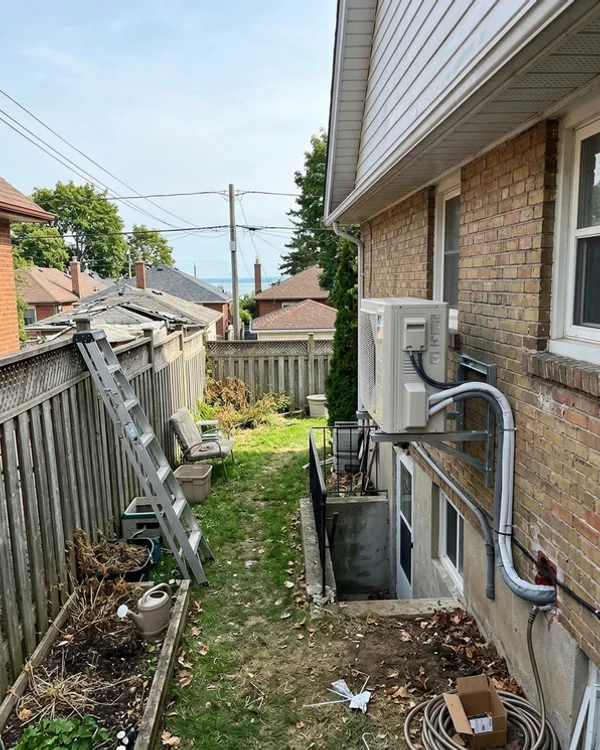
Geothermal makes sense on big rural lots with access for a rig. On a Mimico or Leaside lot, the drilling quote usually ends the conversation. The Mimico owner on this page priced geothermal, walked away, and put in a two-head LG multi-zone with the furnace as backup instead.
Which formats are there?
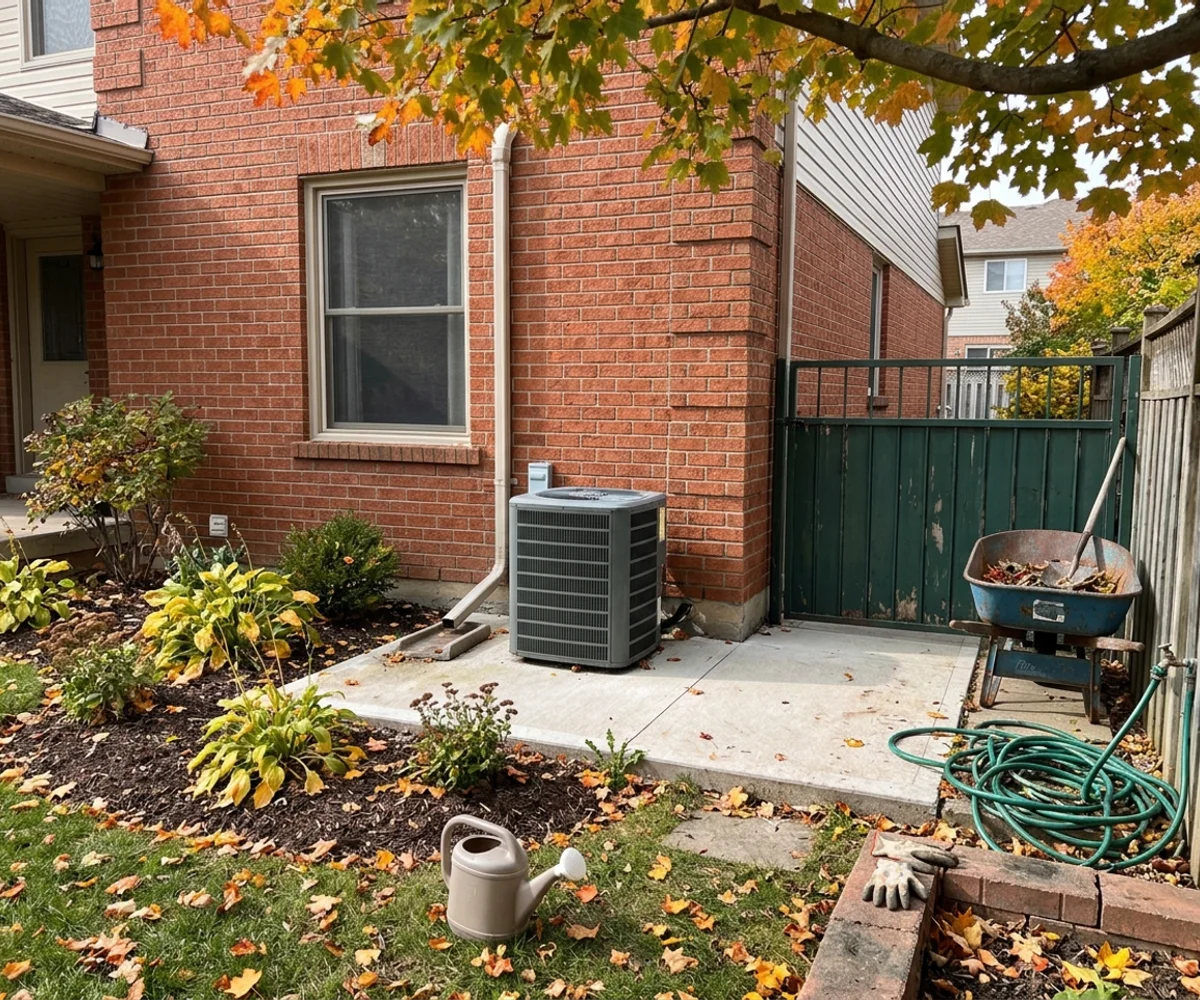
- Ducted central. One outdoor unit, an air handler or coil on your ducts. See central ducted heat pumps.
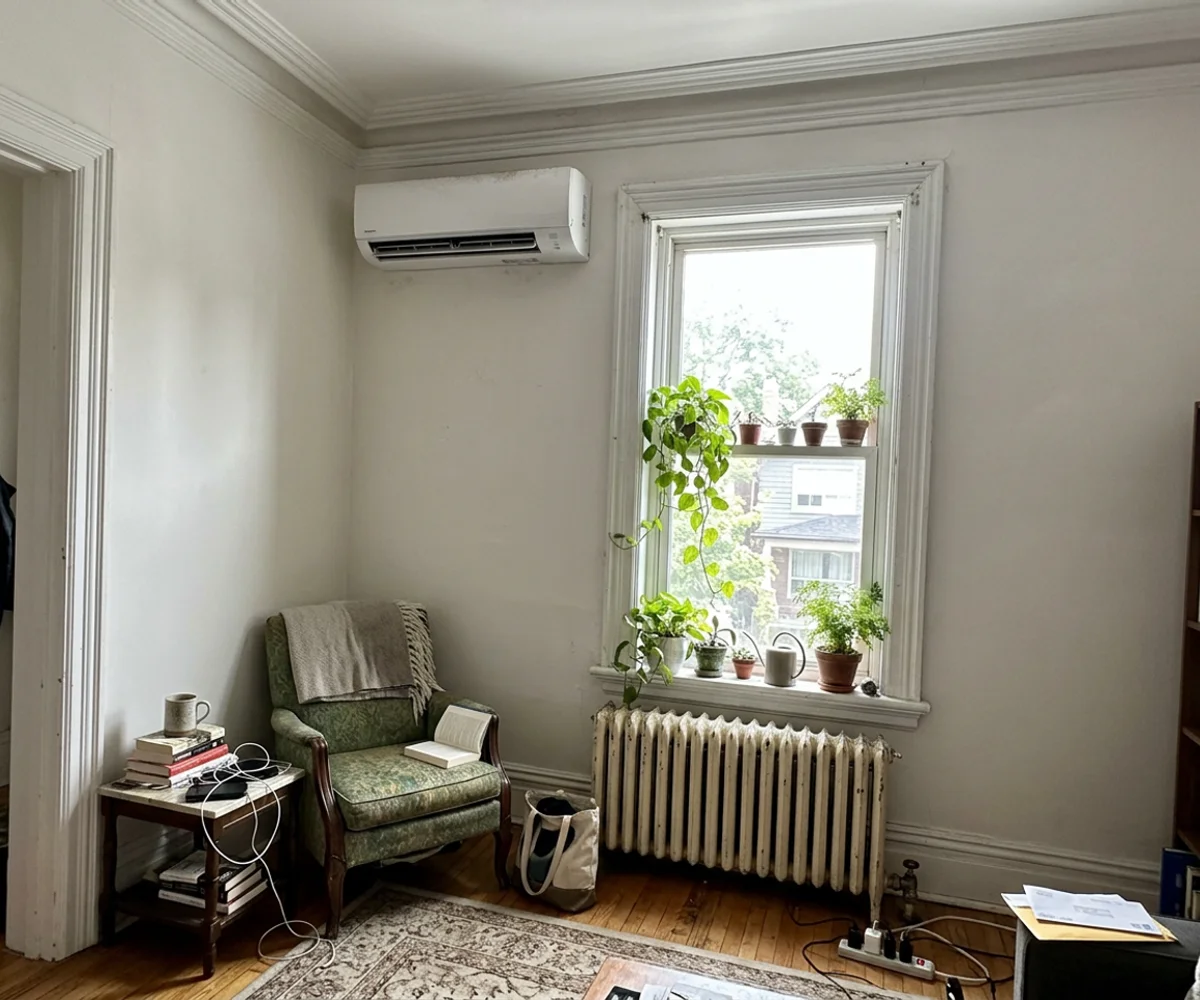
- Ductless multi-zone. One outdoor unit, several indoor heads. See ductless heat pumps.
- Single-zone mini-split. One head for one room or suite.
The format follows the house. The cold-climate rating follows Toronto.
Why the cold rating matters more than the format
A mild-climate ASHP and a cold-climate ASHP look identical on a pad. One holds 100% capacity at -15C and keeps running at -30C. The other loses 40-60% below -15C and leans on strip heat. Check NEEP’s ccASHP list and the extended capacity tables before anything else. Our full lineup is on cold-climate heat pumps.
Placement near the lake
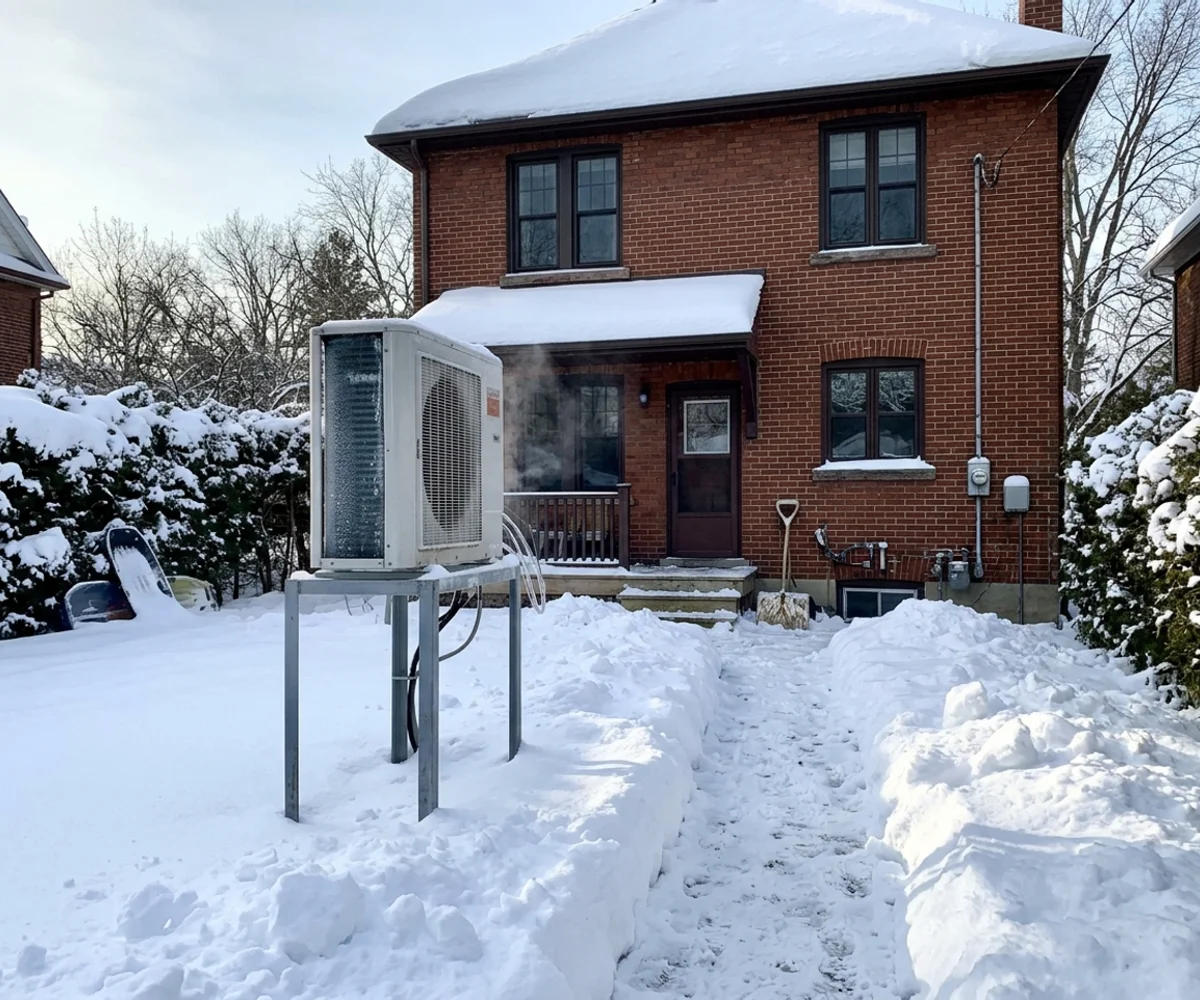
Lake wind off Humber Bay and the Bluffs blows straight into an outdoor coil and drifts snow over it. We mount higher, pick a sheltered wall, and turn the intake away from the prevailing wind so the unit defrosts less often.
Air-source installs run across Etobicoke, Mississauga and the rest of the GTA. When you’re ready to price one, request the load calc.